The Women’s Cluster under the National Association of Non-Governmental Organisations (NANGO) brings together civil society organisations in Zimbabwe committed to advancing women’s rights, gender equality, and inclusive development. The cluster provides a coordinated platform for organisations working to address systemic barriers that continue to limit women’s full participation in social, economic, and political life.
Zimbabwe has made notable progress in strengthening the legal and policy environment for women’s rights, including provisions within the Constitution and laws addressing Gender-Based Violence (GBV). However, in the current socio-economic context, many women—particularly at the grassroots level—continue to face challenges such as domestic violence, limited access to justice, and low awareness of their legal rights. This gap highlights the need for intensified legal literacy, community awareness, and access to support services.
The Women’s Cluster also addresses the persistent underrepresentation of women in leadership and decision-making processes across public institutions, the private sector, and political spaces. Despite existing frameworks, women’s participation in governance remains limited, underscoring the need for inclusive policies, affirmative action measures, and strengthened advocacy efforts.
Economic empowerment remains a key priority, as many women in Zimbabwe continue to face structural inequalities in accessing and controlling productive resources such as land, finance, markets, and technology. These barriers are further exacerbated by economic instability, limiting opportunities for sustainable livelihoods and financial independence.
In response, the Women’s Cluster provides a collaborative platform for NGOs and women-focused organisations to align strategies, share knowledge, and implement high-impact, gender-responsive programmes. Key focus areas include:
The cluster plays a critical advocacy role in promoting gender-responsive policies in Zimbabwe, including supporting the effective implementation of affirmative action measures such as quota systems to increase women’s representation in leadership and decision-making spaces.
Through coordinated action, capacity strengthening, and sustained engagement, the Women’s Cluster contributes to building a just, inclusive, and equitable society, where women’s rights are fully realised, their voices are amplified, and their contributions to Zimbabwe’s sustainable development are recognised and valued.
The Children’s Cluster under the National Association of Non-Governmental Organisations (NANGO) brings together civil society organisations in Zimbabwe dedicated to promoting, protecting, and advancing the rights and well-being of children. Anchored in a rights-based and child-centred approach, the cluster works to ensure that every child in Zimbabwe has access to a safe, nurturing, and enabling environment in which to grow, learn, and thrive.
In the current Zimbabwean context, children—particularly those in vulnerable communities—continue to face significant barriers to quality education, healthcare, and social protection. Economic challenges and constrained public resources have impacted access to schooling, contributing to school dropouts, child labour, and increased exposure to abuse and exploitation. Limited educational access not only affects children’s immediate well-being but also undermines long-term human capital development and socio-economic mobility.
The Children’s Cluster also responds to emerging risks in an increasingly digital society. While technology has improved access to information and learning opportunities, it has also exposed children to online safety risks, including inappropriate content and exploitation. These dynamics have contributed to concerns such as teenage pregnancies, early sexual debut, and peer-related abuse, reinforcing the need for strengthened child protection systems in both physical and digital spaces.
In addition, harmful cultural, traditional, and religious practices continue to affect children’s rights in some communities. Issues such as child marriage, gender discrimination, and restricted access to education and healthcare—particularly for girls—remain critical areas requiring sustained advocacy and community engagement.
The cluster also recognises shifting family and community structures in Zimbabwe. The weakening of traditional safety nets, including the extended family system, has contributed to increased cases of child neglect, abuse, abandonment, and child-headed households. These challenges are often compounded by domestic violence and complex family dynamics, further heightening children’s vulnerability.
In response, the Children’s Cluster provides a coordinated platform for NGOs and child-focused organisations to strengthen collaboration, share knowledge, and implement integrated, evidence-based interventions. Key focus areas include:
The cluster places strong emphasis on advocacy and policy influence, working with government and stakeholders to strengthen the implementation of child protection laws and policies in Zimbabwe, and to ensure adequate resource allocation for child-focused services.
Through collaboration, capacity building, and community-driven approaches, the Children’s Cluster contributes to building a protective, inclusive, and rights-respecting environment for all children in Zimbabwe, ensuring that no child is left behind and that every child has the opportunity to reach their full potential.
The Health Cluster under the National Association of Non-Governmental Organisations (NANGO) brings together civil society organisations in Zimbabwe working to improve health outcomes and strengthen community resilience. Within Zimbabwe’s current context—characterised by economic pressures, constrained public health resources, and evolving disease burdens—the cluster plays a critical role in coordinating NGO-led health interventions and supporting community-based responses.
Zimbabwe continues to face a dual burden of disease, with ongoing priorities such as HIV prevention, treatment, and care, alongside a growing rise in Non-Communicable Diseases (NCDs) including hypertension, diabetes, and cancer. In addition, the health sector remains vulnerable to public health emergencies, as highlighted by the COVID-19 pandemic, as well as periodic outbreaks of other infectious diseases.
In response, the Health Cluster provides a collaborative platform for NGOs and health-focused organisations to strengthen coordination, share knowledge, and implement evidence-based, high-impact health programmes. Key focus areas include:
The cluster prioritises inclusive and equitable healthcare access, ensuring that interventions respond to the needs of vulnerable and at-risk populations. These include women, children, orphans and vulnerable children (OVCs), persons with disabilities, and key populations such as sex workers. A holistic and integrated approach is adopted, linking health services with psychosocial support, human rights, education, and economic empowerment.
In line with best practice, the Health Cluster promotes evidence-based programming and community-driven interventions, encouraging member organisations to conduct needs assessments and data-informed planning. This ensures that programmes are relevant, sustainable, and responsive to local realities.
The cluster also plays a vital advocacy role in Zimbabwe’s health sector, engaging policymakers and stakeholders to promote increased investment in healthcare, stronger health systems, and inclusive health policies.
Through strengthened coordination, capacity building, and strategic advocacy, the Health Cluster contributes to building a resilient, inclusive, and equitable health system in Zimbabwe, advancing the broader goal of sustainable development and improved quality of life for all.
The Youth Cluster under the National Association of Non-Governmental Organisations (NANGO) brings together civil society organisations in Zimbabwe working to address the evolving needs, challenges, and opportunities facing young people. In a rapidly changing socio-economic environment marked by high youth unemployment, economic instability, and limited formal job opportunities, the cluster plays a critical role in coordinating and strengthening youth-focused interventions.
In Zimbabwe today, a significant proportion of the population is made up of young people, many of whom are navigating barriers to decent work, access to quality education, and meaningful participation in governance and development processes. These challenges have contributed to increased vulnerability to drug and substance abuse, irregular migration, mental health pressures, and exposure to political and social exclusion.
Within this context, the Youth Cluster provides a collaborative and strategic platform for NGOs and youth-serving organisations to harmonise efforts, minimise fragmentation, and promote collective impact. The cluster supports:
In addition, the cluster plays a key advocacy and policy influence role, engaging with government and stakeholders to strengthen the implementation of Zimbabwe’s youth development frameworks and policies. This includes advocating for increased investment in youth programmes, inclusive policy processes, and sustainable livelihood opportunities.
Through enhanced coordination, knowledge sharing, and evidence-based advocacy, the Youth Cluster contributes to positioning young people not merely as beneficiaries but as active agents of transformation, driving sustainable development, innovation, and social transformation in Zimbabwe.
The National Association of Non-Governmental Organisations (NANGO) today joined the global community in commemorating World NGO Day 2026, reaffirming the indispensable role of civil society organisations (CSOs) in driving Zimbabwe’s development, strengthening resilience, and advancing people-centred transformation.
As part of the commemorations, NANGO convened the 3rd Annual CSO Symposiums in Bulawayo, Gweru, Harare, and Mutare, bringing together more than 400 CSOs and key stakeholders from civil society, Government, development partners, the private sector, labour, academia, and non-state actor apex bodies. These symposiums provided a platform to celebrate the enduring contribution of civil society while fostering dialogue, collaboration, and strategic reflection.
This year’s suggested theme, “Celebrating People-Driven Transformation: Adapt, Innovate, and Empower for Resilience and Sustainable Impact,” resonates strongly within Zimbabwe’s current development context. The theme underscores that meaningful and sustainable transformation is not institution-driven, but people-driven, rooted in communities organising around shared needs, aspirations, and solutions.
Speaking during the commemorations, NANGO leadership highlighted that civil society continues to operate within a complex environment marked by economic constraints, climate vulnerabilities, public health pressures, evolving regulatory frameworks, and shifting global development cooperation models. Despite these challenges, the sector remains resilient, innovative, and deeply committed to serving communities.
Across Zimbabwe, CSOs are:
While many of these interventions operate quietly, their cumulative impact is transformative — reinforcing resilience at household, community, and institutional levels.
The symposium also emphasised the importance of adaptation and innovation within the sector. In a rapidly evolving global and national landscape, CSOs are increasingly embracing diversified resource mobilisation strategies, digital tools, improved governance systems, social enterprise models, and strengthened compliance mechanisms to sustain their work.
Central to the discussions was the operationalisation of the PVO Amendment Act. NANGO reiterated the sector’s commitment to constructive engagement to ensure that implementation of the Act remains clear, practical, and facilitative — safeguarding the continuity of essential humanitarian and development services delivered to communities across Zimbabwe. An enabling environment, NANGO emphasised, is built on predictability, transparency, accountability, and mutual trust. It must balance regulatory oversight with operational effectiveness while protecting public interest and safeguarding civic contribution.
World NGO Day serves not only as a celebration but also as a call to action — to recognise the professionalism, ethical leadership, and unwavering commitment of CSO workers who remain at the frontline of service delivery and advocacy, often under significant strain. It also reaffirms the importance of collaboration among Government, development partners, private sector actors, labour, and academia in advancing inclusive and sustainable national development.
NANGO expressed appreciation to State actors for ongoing dialogue toward creation of an enabling operating environment for CSOs, to development partners for their continued solidarity amid global funding uncertainties, and to the broader NGO ecosystem for its resilience and dedication.
As Zimbabwe navigates complex socio-economic realities, NANGO reaffirmed its commitment to fostering and safeguarding an enabling environment in which civil society can thrive and continue contributing to national development.
World NGO Day 2026 stands as both a celebration and a renewed pledge — to adapt in the face of change, to innovate amid constraints, to empower communities for sustainability, and to build resilience for a people-driven, inclusive Zimbabwe.
The National Association of Non-Governmental Organisations (NANGO) is Zimbabwe’s apex body for non-governmental organisations, representing and coordinating the collective interests of civil society to promote sustainable development, democratic governance, and an enabling operating environment.
For media enquiries, please contact:
NANGO Communications Desk via email at info@nangozim.org or cell at +263 712 507 925
Zimbabwe has commenced preparations for its third round Financial Action Task Force (FATF) Mutual Evaluation, scheduled for 2026–2027. The Mutual Evaluation will assess the country’s compliance with international standards on Anti-Money Laundering, Countering the Financing of Terrorism, and Countering Proliferation Financing (AML/CFT/CPF), including FATF Recommendation 8, which specifically relates to Non-Profit Organisations (NPOs). This process is highly consequential for civic space. Without proactive and informed civil society engagement, there is a risk that overly restrictive regulatory measures may be introduced under the banner of international compliance, further limiting the ability of CSOs to operate freely and legitimately. At the same time, the evaluation presents an important opportunity for civil society to influence risk assessments and policy responses to ensure that AML/CFT/CPF measures are proportionate, evidence-based, and consistent with international human rights standards.
As part of the preparatory phase, the Eastern and Southern Africa Anti-Money Laundering Group (ESAAMLG) convened a Pre-Mutual Evaluation Workshop from 12 – 16 January 2026 at Rainbow Towers Hotel in Harare. The workshop aimed to prepare key stakeholders who will be directly involved in Zimbabwe’s Mutual Evaluation, including officials working on AML/CFT/CPF matters and representatives expected to engage with FATF assessors during the evaluation process. Participation targeted institutions responsible for policy, regulation, and implementation within the national AML/CFT/CPF framework.
Civil society participation in the workshop was limited, reflecting the historically constrained involvement of NPOs in FATF-related processes. Through NANGO’s facilitation, representatives from the Zimbabwe Council of Churches (ZCC), the Alliance of Community-Based Organisations (ACBOs), and the Zimbabwe Human Rights NGO Forum attended the workshop, alongside the PVO Registrar and officers from the Ministry of Public Service, Labour and Social Welfare (MoPSLSW). In total, four representatives participated on behalf of the NPO constituency.
The workshop was particularly significant for civil society as it builds on ongoing advocacy around FATF Recommendation 8, which has frequently been misinterpreted and misapplied in ways that justify disproportionate regulation of NPOs. In Zimbabwe, such misapplication has contributed to restrictive legal and policy developments, including provisions within the Private Voluntary Organisation (PVO) Amendment Act of 2025. The limited representation of NPOs at the workshop further underscores the need for deliberate and coordinated engagement to ensure that civil society perspectives are adequately reflected throughout the Mutual Evaluation process.
Historically, Zimbabwean civil society has not meaningfully participated in previous FATF Mutual Evaluations and has largely been excluded from in-country AML/CFT/CPF processes. Many CSOs and CBOs have a limited understanding of how the Mutual Evaluation operates, the areas of focus for assessors, and the potential implications of the process for civic space and organisational operations. This knowledge gap heightens the risk of regulatory responses that may undermine legitimate civil society work.
In response, NANGO is prioritising a sector-wide sensitisation and awareness initiative aimed at strengthening CSO and CBO preparedness for Zimbabwe’s upcoming FATF Mutual Evaluation. The initiative will focus on demystifying the Mutual Evaluation process, clarifying the intent and scope of FATF Recommendation 8, and explaining the role of civil society in supporting compliance while safeguarding operational freedoms. It will also address in-country AML/CFT/CPF obligations, typical areas of assessor scrutiny, and practical measures organisations can adopt to identify compliance gaps and mitigate risk.
The overall objective of this initiative is to strengthen sectoral understanding of FATF Recommendation 8, empower organisations to engage meaningfully with the Mutual Evaluation exercise, and foster collective advocacy for risk-based, proportionate, and rights-respecting AML/CFT/CPF oversight. This is particularly important given that NPOs will be afforded an opportunity to engage directly with FATF assessors during the Mutual Evaluation process.
Based on key takeaways from the preparatory process and lessons from other jurisdictions, including Kenya, NANGO intends to establish a Zimbabwe NPO Technical Working Group (TWG) on FATF. The TWG will serve as a structured and coordinated platform to strengthen civil society engagement in FATF-related processes. It will facilitate engagement with regulators, policymakers, and other stakeholders on the implementation of a risk-based approach to AML/CFT/CPF oversight that is effective without undermining civic space.
The TWG will also monitor AML/CFT/CPF compliance trends, assess regulatory risks, and provide timely updates and technical guidance to CSOs. Through coordinated advocacy, peer learning, and capacity building, the group will support efforts to prevent the securitisation of civic space and ensure that compliance measures do not become tools for arbitrary or disproportionate restrictions on civil society. It will further enable CSOs to anticipate regulatory changes, provide informed input into the Mutual Evaluation, and contribute meaningfully to shaping national AML/CFT/CPF responses.
The Mutual Evaluation will assess both Zimbabwe’s technical compliance with the FATF 40 Recommendations and the effectiveness of its AML/CFT/CPF system. Mandatory Recommendations to be assessed include Recommendations 1, 2, 4, 8, 15, 24, 25, 30, 31, 38, and 40. The process will culminate in a single public Mutual Evaluation Report that provides an internationally agreed assessment of Zimbabwe’s compliance and effectiveness, alongside recommendations for strengthening the national AML/CFT/CPF framework.
Of particular relevance to civil society is Immediate Outcome 10, which examines the extent to which Zimbabwe has applied focused and proportionate mitigation measures to NPOs identified as vulnerable to terrorist financing abuse, without disrupting or discouraging legitimate NPO activities. FATF Recommendation 8 explicitly seeks to address the historical misapplication of counter-terrorism financing measures to the non-profit sector. It requires countries to identify relevant risks, apply proportionate and targeted measures, and remain mindful of the impact of regulation on legitimate NPO activities. Measures that are overly burdensome or restrictive, or that impose obligations such as due diligence on NPOs, are not consistent with the FATF standards.
During the 15th Edition of the NANGO Annual NGO Directors’ Summer Retreat, held in Masvingo, a dedicated session on the FATF Mutual Evaluation Overview was convened to further enhance civil society understanding of the process and its implications. A presentation was delivered by Mr. Tichafa Chigaba, Deputy Director at the Financial Intelligence Unit (FIU) Zimbabwe, who provided insights into the Mutual Evaluation framework, key assessment areas, and expectations for Zimbabwe ahead of the 2026–2027 evaluation cycle. The engagement formed part of NANGO’s ongoing efforts to promote informed, constructive dialogue between civil society and regulators on AML/CFT/CPF issues. For those who were unable to attend the session, the recording is available and can be accessed here:
The FATF Mutual Evaluation represents a critical moment for Zimbabwe’s civil society sector. The way AML/CFT/CPF standards are interpreted and implemented during this process will have lasting consequences for civic space, organisational autonomy, and democratic participation. Sustained, coordinated, and technically informed civil society engagement will be essential to ensure that international compliance obligations strengthen transparency and accountability without eroding the freedoms necessary for civil society to operate effectively.
Season’s greetings from the National Association of Non-Governmental Organisations (NANGO). I am pleased to extend warm compliments and a heartfelt welcome to our members, partners, stakeholders, and the general public as we officially resume office operations following the festive season break. Please be advised that with effect from 12 January 2026, all NANGO offices have fully resumed operations.
This new year presents a timely opportunity to reaffirm NANGO’s commitment to institutional strengthening; enhancing our value proposition to membership; positioning NANGO as a hub for CSO capacitation and knowledge generation; strengthening collective advocacy and policy influence; fostering an enabling operating environment; and promoting effective CSO engagement on both national and global development agendas. NANGO remains steadfast in its mandate to coordinate, represent, and strengthen the civil society sector in Zimbabwe.
As we embark on 2026, we remain acutely aware that the operating environment for CSOs in Zimbabwe and beyond continues to evolve in complex and often challenging ways. This environment is increasingly shaped by regulatory shifts, persistent political and socio-economic uncertainties, shrinking development financing, and deepening social challenges, placing immense pressure on CSOs and the communities we serve.
The Private Voluntary Organisations (PVO) Amendment Act remains only partially operationalised. Key processes are still outstanding, including the gazetting of the accompanying regulations, the reconstitution of the PVO Board, and the establishment of the new PVO Registrar’s Office. In addition, a significant backlog of registration applications remains unresolved. For many organisations in transition, this situation has generated heightened anxiety, uncertainty, and frustration as they seek to regularise their legal status. These realities underscore the continued importance of sustained and constructive engagement with regulators, alongside the provision of practical compliance guidance and strengthened sector-wide coordination.
Compounding the regulatory context are ongoing shifts in the development financing landscape. Budgetary contractions, donor strategic realignments, and evolving global priorities driven by geopolitical shifts and humanitarian crises continue to reshape funding flows. At the same time, Zimbabwe faces persistent socio-economic challenges, including high unemployment, rising drug and substance abuse, worsening mental health outcomes, deepening poverty, and enduring social inequalities. These challenges have intensified demand for CSO interventions at a time when available resources are increasingly constrained.
This growing mismatch between needs and resources reinforces the urgency of strengthening partnerships with diverse stakeholders, exploring domestic resource mobilisation opportunities, and engaging in forward-looking conversations on sustainable development financing. As a sector, we are called not only to adapt, but to innovate, collaborate, and collectively safeguard civic space, while remaining responsive to the communities we exist to serve.
During the course of 2026, NANGO will roll out several flagship initiatives, including: the 3rd Edition of the CSO Symposium commemorating World NGO Day; CSO support and accompaniment on the implementation of the PVO Amendment Act, 2025; CSO Capacity Development Programme; Regional Annual NGO Expos Winter Schools; the 16th Edition of the NANGO Annual NGO Directors’ Summer Retreat; ongoing “Talk to Your Regulator” sessions; and Compliance Clinics, among others.
I wish to express my sincere appreciation to our development partners, government institutions, private sector actors, academia, the media, and all allies of civil society for their continued collaboration and support. These partnerships remain critical in fostering dialogue, mutual accountability, and collective action towards improving the lives of the people we serve.
I encourage all members, partners, and stakeholders to actively engage with us throughout the year as we deepen our partnerships and work together for greater collective impact.
Once again, I warmly welcome you to the 2026 work year and extend my best wishes for what promises to be a productive, impactful, and transformative year ahead.
In solidarity,
Mr. Ernest Nyimai
Executive Director, NANGO
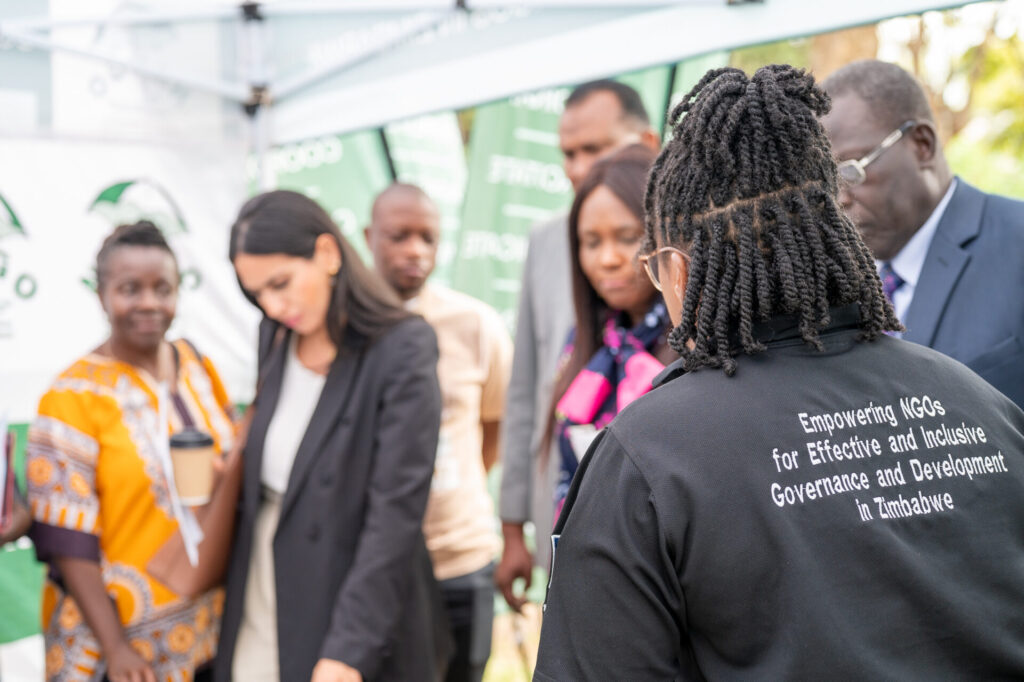
21 October 2025 | Harare, Zimbabwe – The National Association of Non-Governmental Organisations (NANGO) joins the Zimbabwe Human Rights Commission (ZHRC), Civil Society Organisations (CSOs), government representatives, development partners, academia, the media, and the private sector in commemorating the 2025 Africa Human Rights Day (AHRD).
NANGO extends its appreciation to the ZHRC for providing this important platform to reflect on and celebrate human rights progress across the continent.
As the umbrella and coordinating body of CSOs in Zimbabwe, NANGO stands in solidarity with the ZHRC and all stakeholders in advancing the principles enshrined in the African Charter on Human and Peoples’ Rights (ACHPR). Adopted in 1986 by the Organisation of African Unity (OAU), the Charter—often referred to as Africa’s Bill of Rights—outlines the fundamental freedoms and responsibilities that all African states must protect, promote, and uphold.
This year’s theme, “Justice for Africans and People of African Descent Through Reparations,” highlights the need to acknowledge historical injustices and take meaningful action toward redress. Justice and reparations are not abstract aspirations—they are essential steps toward dignity, healing, and transformation.
Human rights in Africa are not a peripheral issue; they are transformative, shaping the trajectory of nations and rooted in Africa’s shared identity, cultures, and values. Upholding human rights fosters security, equality, and dignity, enabling individuals and communities to thrive, participate meaningfully, and contribute to sustainable development.
As we commemorate Africa Human Rights Day in Zimbabwe, NANGO urges all stakeholders to remember those whose rights remain unrealised—the vulnerable, the marginalised, and the voiceless. This commemoration is a call to action: to raise awareness, strengthen solidarity, and build partnerships across society. Government institutions, civil society, the private sector, and communities must work collectively to accelerate progress and ensure that no one is left behind.
NANGO reaffirms its unwavering commitment to the promotion and protection of human and peoples’ rights. The organisation will continue to:
For over a decade, the ZHRC has worked tirelessly to promote, protect, and enforce human rights and administrative justice in Zimbabwe. Through its constitutional mandate, the Commission continues to safeguard the public from abuse of power, investigate violations, monitor conditions in detention facilities, and make recommendations for redress. It also promotes education, advocacy, and research on human rights, supports special interest groups, and monitors elections in line with its constitutional functions.
As NANGO, we stand in solidarity with this noble cause. We believe in equity, justice, inclusion, and accountability—that the full realisation of human rights must move beyond rhetoric and result in tangible, measurable change in our communities, institutions, and everyday lives.
On behalf of the entire civil society fraternity, NANGO reaffirms its solidarity with the people of Zimbabwe and all Africans in the pursuit of justice, equality, and human dignity. Together, let us transform human rights from aspiration into lived reality, and continue to build a Zimbabwe and an Africa where no one is left behind.
We are excited to announce the launch of Nosizo, our new WhatsApp-based Compliance Assistant Chatbot.
Nosizo is a digital tool designed to support Non-Governmental Organisations (NGOs), Civil Society Organisations (CSOs), Community-Based Organisations (CBOs), and even the general public in understanding the regulatory and compliance requirements for organisations operating in Zimbabwe. It provides easy-to-access, up-to-date guidance on legal frameworks, registration processes, reporting requirements, and key policies affecting the civil society sector.
Civil society in Zimbabwe operates in a complex and evolving regulatory environment. Navigating compliance requirements can often be confusing and time-consuming. With Nosizo, you can now access clear, simplified, and reliable information instantly — anytime, anywhere.
To ensure inclusivity and accessibility, Nosizo is conversant in multiple languages — including English, Shona, and Ndebele — making compliance guidance easier to understand for all stakeholders across Zimbabwe.
Simply click this link and start chatting with Nosizo on WhatsApp today!
Contact → 📞 “How can I reach NANGO directly?”
💬 Pro Tip: Anytime you get lost, just type Help.
We believe in empowering civil society through knowledge and innovation. Nosizo is here to make compliance easier, strengthen transparency, and ensure that NGOs and CSOs can continue delivering impact to communities across Zimbabwe.
📲 Start the conversation now and let Nosizo guide you towards compliance made simple!
The Ministry of Public Service, Labour and Social Welfare (MoPSLSW) has officially gazetted the new registration fees for Private Voluntary Organisations (PVOs) through Statutory Instrument (S.I.) 82 of 2025. The regulation, issued under Section 28 of the Private Voluntary Organisations Act [Chapter 17:05], introduces separate registration fees for international and local PVOs.
International PVOs are now required to pay a registration fee of US$250.00, while local PVOs will pay a registration fee of US$150.00, payable in local currency at the prevailing bank rate. What remains unclear is whether the organisations will pay at the point of application submission or once their application documents are reviewed by the registrar. It is also unclear whether the payments will be done by cash only or bank transfers will be permissible. We are also unsure on whether organisations that have submitted their applications prior to the gazette will pay or it shall only apply to organisations that are yet to submit their applications. NANGO shall engage the Registrar’s office to get clarification on these grey areas.
NANGO continues to monitor developments regarding the implementation and the operationalisation of the PVO Amendment Act, advocating for a seamless process that will not inhibit or disrupt the operations of the organisations as they adapt to the new regulatory regime.
To ensure members and stakeholders receive tailored support, NANGO is rolling out Compliance Clinics across all its regional offices, designed to provide practical guidance on registration, compliance requirements, and navigating the evolving regulatory framework. These clinics create a safe and collaborative space where organisations can access expert advice, ask questions, and gain clarity on issues related to the PVO Amendment Act and its implementation.
Additionally, you can now get instant support on PVO registration, compliance matters, and other related queries through the NANGO Compliance Chatbot at +263 78 536 1929. Simply start a chat and our virtual assistant will guide you with the information and resources you need.
We remain committed to ensuring that members, partners, and stakeholders have timely information on regulatory updates. We encourage organisations to take note of these changes and factor them into their compliance planning.